Craving something warm, cozy, and full of bold Korean flavors? Korean soups (guk or jjigae) are the ultimate comfort food — rich, nourishing, and packed with umami. From fiery kimchi stews to soothing ginseng chicken soup, these recipes will warm your soul and satisfy your cravings. Slurping is encouraged!
:max_bytes(150000):strip_icc()/Kimchi-Jjigae-Kimchi-Stew-FT-MAG-RECIPE-0325-55ba879d9ecb46ba8df005abfbee5466.jpg)
1. Kimchi Jjigae (Kimchi Stew)
This spicy, tangy stew is a Korean staple made with fermented kimchi, pork, tofu, and gochujang. It's bold, comforting, and perfect with steamed rice.
Ingredients (Serves 4)
- 500g ripe kimchi (with juice)
- 300g pork belly or shoulder, sliced
- 200g firm tofu, cubed
- 1 onion, sliced
- 2 green onions, chopped
- 2 tbsp gochujang (Korean chili paste)
- 1 tbsp gochugaru (Korean chili flakes)
- 4 cups water or anchovy stock
- 1 tsp sesame oil
- Salt and pepper to taste
Instructions
- In a pot, sauté pork until browned. Add kimchi and stir-fry for 2-3 minutes.
- Add gochujang, gochugaru, and water/stock. Bring to a boil, then simmer for 20 minutes.
- Add tofu and simmer for another 10 minutes. Finish with sesame oil and green onions.
- Serve hot with rice.

2. Sundubu Jjigae (Spicy Soft Tofu Stew)
Creamy soft tofu in a spicy, bubbling broth with seafood or meat. This jjigae is served sizzling hot!
Ingredients (Serves 4)
- 1 package (400g) soft silken tofu
- 200g shrimp or beef
- 1/2 onion, diced
- 2 tbsp gochujang
- 1 tbsp gochugaru
- 2 garlic cloves, minced
- 4 cups anchovy stock
- 1 egg (optional)
- Green onions for garnish
Instructions
- Heat oil in a pot, sauté garlic, onion, and gochugaru.
- Add protein and stir-fry, then add stock and gochujang. Simmer 10 minutes.
- Gently add soft tofu and simmer 5 more minutes.
- Crack an egg on top and serve immediately.
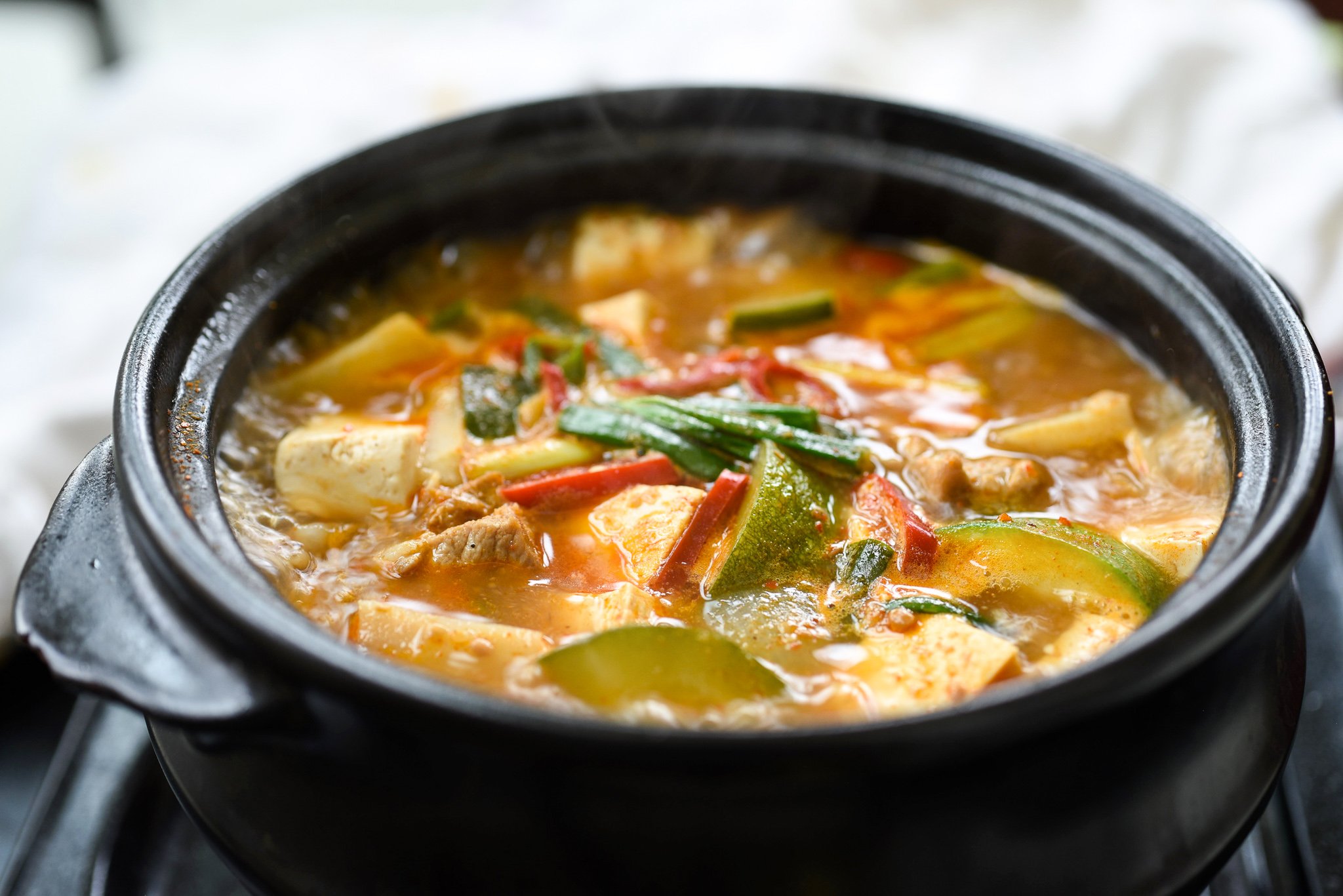
3. Doenjang Jjigae (Soybean Paste Stew)
A hearty, earthy stew with fermented soybean paste, vegetables, and tofu. Comforting and full of umami.
Ingredients (Serves 4)
- 3 tbsp doenjang (Korean soybean paste)
- 200g pork or beef, cubed
- 1 zucchini, sliced
- 1 potato, cubed
- 1 onion, sliced
- 100g mushrooms
- 4 cups water
- 1 tbsp sesame oil
Instructions
- Boil water, add doenjang and stir to dissolve.
- Add meat and vegetables, simmer for 20-25 minutes until tender.
- Finish with sesame oil and serve.

4. Samgyetang (Ginseng Chicken Soup)
A nourishing whole chicken stuffed with sticky rice, ginseng, and jujubes. Traditionally eaten in summer for energy.
Ingredients (Serves 4)
- 1 whole young chicken
- 1/2 cup sticky rice, soaked
- 4-6 garlic cloves
- 1 ginseng root
- 4 jujubes
- 1/2 cup sweet rice wine
- 8 cups water
Instructions
- Stuff chicken with rice, garlic, ginseng, and jujubes.
- Boil in water with rice wine for 1-1.5 hours until tender.
- Garnish with green onions and serve.

5. Seolleongtang (Ox Bone Soup)
Milky white broth from long-simmered ox bones. Served with rice and green onions.
Ingredients (Serves 6)
- 2kg ox bones
- 500g beef brisket
- Water to cover
- Salt to taste
- Green onions for serving
Instructions
- Blanch bones, then simmer for 6-10 hours until milky.
- Strain, add brisket, and cook until tender.
- Season with salt and serve with rice.

6. Yukgaejang (Spicy Beef Soup)
Fiery red soup with beef, fernbrake, and vegetables. A classic hangover cure.
Ingredients (Serves 4)
- 300g beef brisket
- 1 cup dried fernbrake (gosari)
- 1 onion, sliced
- 2 tbsp gochugaru
- 4 cups beef stock
- Green onions
Instructions
- Boil beef, shred, then sauté with gochugaru.
- Add stock, fernbrake, and vegetables; simmer 30 minutes.
- Serve hot.

7. Miyeokguk (Seaweed Soup)
Light, nourishing soup with beef and seaweed. Traditionally eaten on birthdays.
Ingredients (Serves 4)
- 50g dried wakame seaweed
- 200g beef
- 4 cups water
- 1 tbsp sesame oil
- 1 tbsp soy sauce
Instructions
- Soak seaweed, sauté beef in sesame oil.
- Add seaweed and water, simmer 20 minutes.
- Season and serve.
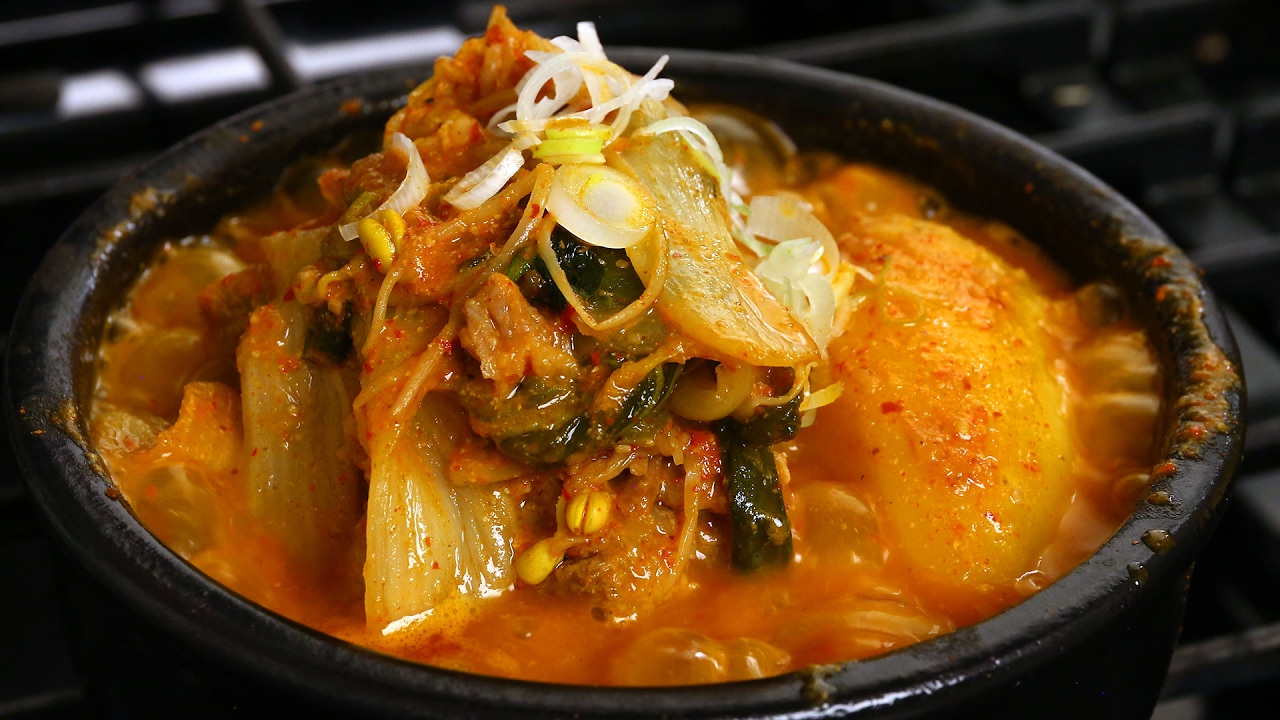
8. Gamjatang (Pork Bone Soup)
Spicy pork bone soup with potatoes, perilla seeds, and cabbage. A hearty winter dish.
Ingredients (Serves 4)
- 1.5kg pork neck bones
- 4 potatoes, halved
- 1/2 cabbage
- 2 tbsp perilla seeds
- 3 tbsp gochujang
Instructions
- Blanch bones, simmer 2 hours.
- Add vegetables, spices, and simmer until tender.
- Serve with rice.
:max_bytes(150000):strip_icc()/Budae-Jjigae-Army-Base-Stew-FT-MAG-RECIPE-0325-0992558366f543318e96bbe824330495.jpg)
9. Budae Jjigae (Army Stew)
Fusion stew with spam, sausages, kimchi, and noodles. A post-war Korean classic.
Ingredients (Serves 4)
- 200g spam, sliced
- 200g sausages
- 1/2 cup kimchi
- Instant ramen noodles
- 4 cups beef stock
- 1 tbsp gochujang
Instructions
- Arrange ingredients in pot, pour stock and spices.
- Boil until noodles are cooked.
- Serve bubbling hot.

10. Tteokguk (Rice Cake Soup)
Clear beef broth with sliced rice cakes, egg ribbons, and nori. Eaten for New Year.
Ingredients (Serves 4)
- 300g sliced rice cakes
- 200g beef
- 1 egg, beaten
- Nori strips
- 6 cups beef stock
Instructions
- Boil beef in stock, add rice cakes.
- Pour beaten egg in a thin stream.
- Garnish with nori and green onions.

11. Dakgaejang (Spicy Chicken Soup) or Dak Gomtang (Clear Chicken Soup)
A comforting clear or spicy chicken broth with tender meat, often served with noodles for a hearty meal.
Ingredients (Serves 4)
- 1 whole chicken or 1kg chicken parts
- 1 onion, halved
- 6 garlic cloves
- 2 tbsp gochugaru (for spicy version)
- Green onions, chopped
- Salt and pepper
- 8 cups water
- Noodles (optional)
Instructions
- Boil chicken with onion and garlic for 1 hour.
- Shred chicken, return to broth.
- For spicy: Add gochugaru and simmer.
- Serve with noodles and green onions.
:max_bytes(150000):strip_icc()/galbi-tang-short-rib-soup-2118937-hero-01-cffa3f254c2c417b93ef68e46afaa91d.jpg)
12. Galbitang (Beef Short Rib Soup)
Clear, flavorful soup with tender beef short ribs, glass noodles, and radish.
Ingredients (Serves 4)
- 1kg beef short ribs
- 1 Korean radish, sliced
- 100g glass noodles
- 6 garlic cloves
- Green onions
- Salt and pepper
- 10 cups water
Instructions
- Soak ribs, blanch, then simmer with garlic for 2 hours.
- Add radish and noodles, cook until tender.
- Season and garnish with green onions.
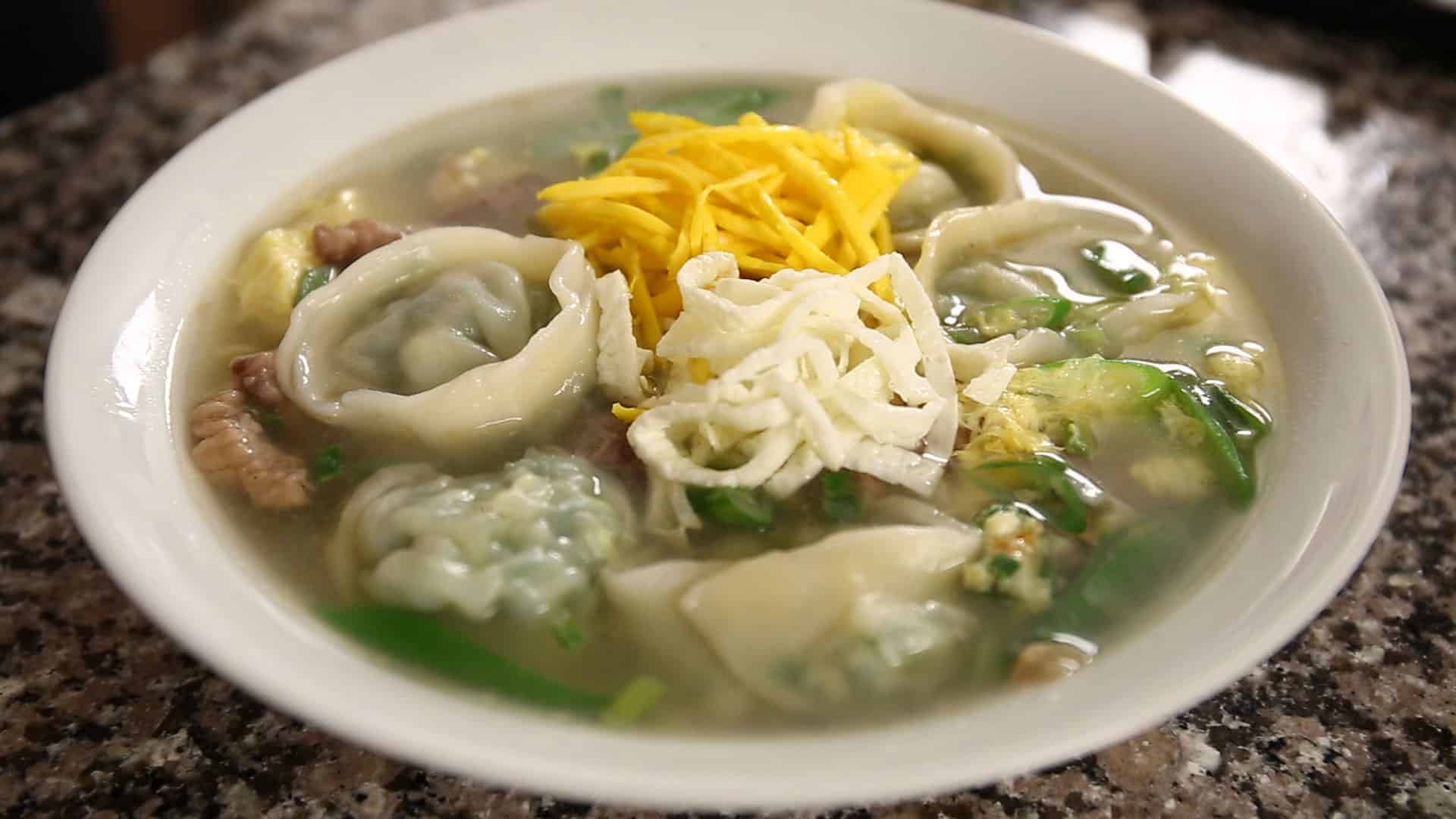
13. Manduguk (Dumpling Soup)
Light broth with handmade or store-bought dumplings, seaweed, and egg.
Ingredients (Serves 4)
- 20-30 mandu (Korean dumplings)
- 6 cups anchovy or beef stock
- 1 egg, beaten
- Nori strips
- Green onions
- 1 tbsp soy sauce
Instructions
- Bring stock to boil, add dumplings.
- Cook until dumplings float.
- Drizzle egg, add seasonings.
- Garnish and serve.

14. Kongnamulguk (Soybean Sprout Soup)
Simple, refreshing soup with crunchy soybean sprouts, often a hangover remedy.
Ingredients (Serves 4)
- 400g soybean sprouts
- 5 cups water or anchovy stock
- 2 garlic cloves, minced
- 1 tsp salt
- Green onions
- 1 tbsp sesame oil
Instructions
- Boil sprouts in water/stock for 10 minutes.
- Add garlic, salt, and sesame oil.
- Garnish with green onions.
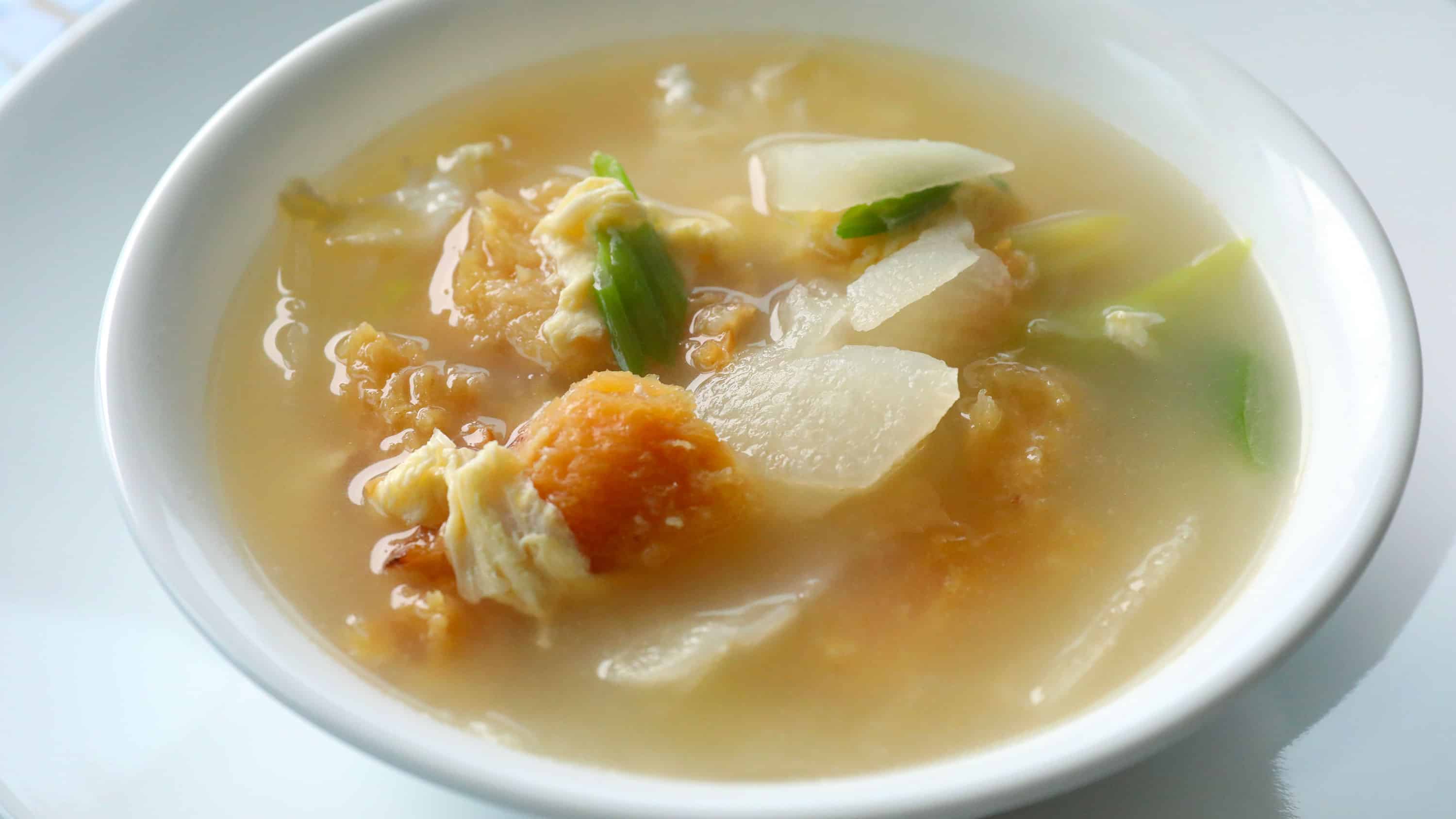
15. Bugeoguk (Dried Pollock Soup)
Mild, savory soup made with dried pollock, tofu, and egg – great for recovery.
Ingredients (Serves 4)
- 100g dried pollock
- 200g tofu, cubed
- 1 egg, beaten
- Green onions
- 4 cups water
- 1 tbsp sesame oil
Instructions
- Tear pollock, sauté in sesame oil.
- Add water, simmer 15 minutes.
- Add tofu and egg, cook briefly.
- Garnish and serve.
:max_bytes(150000):strip_icc()/__opt__aboutcom__coeus__resources__content_migration__serious_eats__seriouseats.com__recipes__images__2014__01__20140120-beef-ramyun-homemade-recipe-15-014423f0ac734abc8c0d826e54857afe.jpg)
16. Spicy Korean Noodle Soup (Jjamppong or Ramyun Style)
Bold, spicy seafood or beef noodle soup with vegetables and instant or fresh noodles.
Ingredients (Serves 4)
- 4 packs instant ramen or fresh noodles
- 200g seafood or pork
- Vegetables (onion, cabbage, carrot)
- 3 tbsp gochugaru
- 4 cups stock
- 2 tbsp soy sauce
Instructions
- Sauté meat/seafood and vegetables with gochugaru.
- Add stock and soy sauce, boil.
- Add noodles, cook until done.
- Serve hot.

17. Baechu Doenjangguk (Cabbage Soybean Paste Soup)
Earthy doenjang soup featuring napa cabbage for added sweetness and texture.
Ingredients (Serves 4)
- 1/2 napa cabbage, chopped
- 3 tbsp doenjang
- 1 potato, cubed
- 1 onion
- 4 cups water
- Green onions
Instructions
- Dissolve doenjang in boiling water.
- Add cabbage, potato, and onion.
- Simmer 20 minutes until vegetables are soft.
- Garnish and serve.
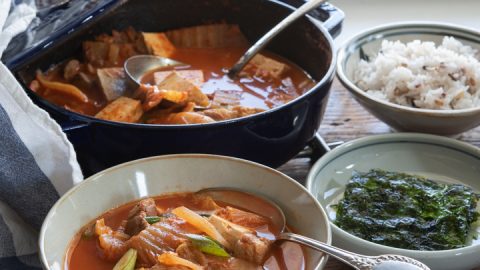
18. Tangy Kimchi Stew with Tomatoes
A twist on classic kimchi jjigae with added tomatoes for extra tanginess and freshness.
Ingredients (Serves 4)
- 400g kimchi
- 3 tomatoes, chopped
- 200g pork
- 200g tofu
- 2 tbsp gochujang
- 4 cups water
Instructions
- Sauté pork and kimchi.
- Add tomatoes, gochujang, and water.
- Simmer 20 minutes, add tofu.
- Serve hot.

19. Soegogi Muguk (Korean Beef and Radish Soup)
Clear, soothing soup with beef brisket and Korean radish for a clean flavor.
Ingredients (Serves 4)
- 400g beef brisket
- 1 large Korean radish, sliced
- 6 garlic cloves
- Green onions
- Salt and pepper
- 8 cups water
Instructions
- Boil beef and garlic for 1 hour.
- Add radish, simmer until tender.
- Season and garnish.
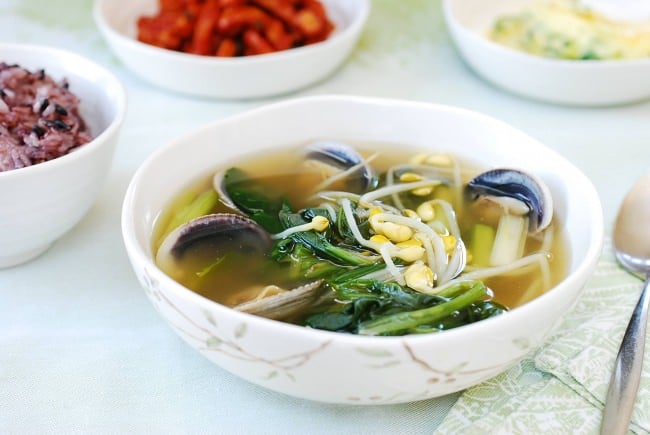
20. Sigeumchi Guk (Classic Korean Spinach Soup)
Light, healthy soup with blanched spinach in clear broth, often with doenjang.
Ingredients (Serves 4)
- 300g fresh spinach
- 2 tbsp doenjang
- 4 cups anchovy stock
- 2 garlic cloves, minced
- Green onions
- Sesame oil
Instructions
- Blanch spinach, squeeze out water.
- Boil stock with doenjang and garlic.
- Add spinach, simmer briefly.
- Drizzle sesame oil and serve.
These 20 recipes showcase the diversity of Korean soups – from spicy and bold to mild and restorative. Perfect for any occasion!