Steps are now highly detailed with timings, techniques, and tips for authentic results. Serves 2 unless noted. Nutrition approximate per serving.
1. Matcha Mousse Cake – Delicious Dessert for Special Mornings
Earthy matcha mousse layered on a soft base (makes 8 slices).
- Prepare gelatin: Sprinkle 5 g gelatin over 30 ml cold water in a small bowl; let bloom 5–10 min until spongy.
- Heat bloomed gelatin gently in microwave (10-sec bursts) or over warm water until fully dissolved (do not boil).
- Whip 400 ml heavy cream with 80 g powdered sugar in a chilled bowl using electric mixer on medium speed until soft peaks form (about 2–3 min; stop before stiff to avoid graininess).
- Divide whipped cream into two bowls. Sift 15 g matcha into one bowl; gently fold in with a spatula until uniform green color (avoid overmixing to prevent deflation).
- Fold dissolved gelatin into matcha cream first (it sets faster), then fold vanilla into the plain cream.
- Place sponge base in a springform pan or deep dish lined with parchment. Pour matcha mousse layer first; smooth top. Chill 20–30 min to partially set.
- Pour vanilla layer over set matcha; smooth. Refrigerate 4+ hours (or overnight) until fully firm.
- Remove from pan, dust with extra matcha using a fine sieve. Slice with warm knife for clean cuts.

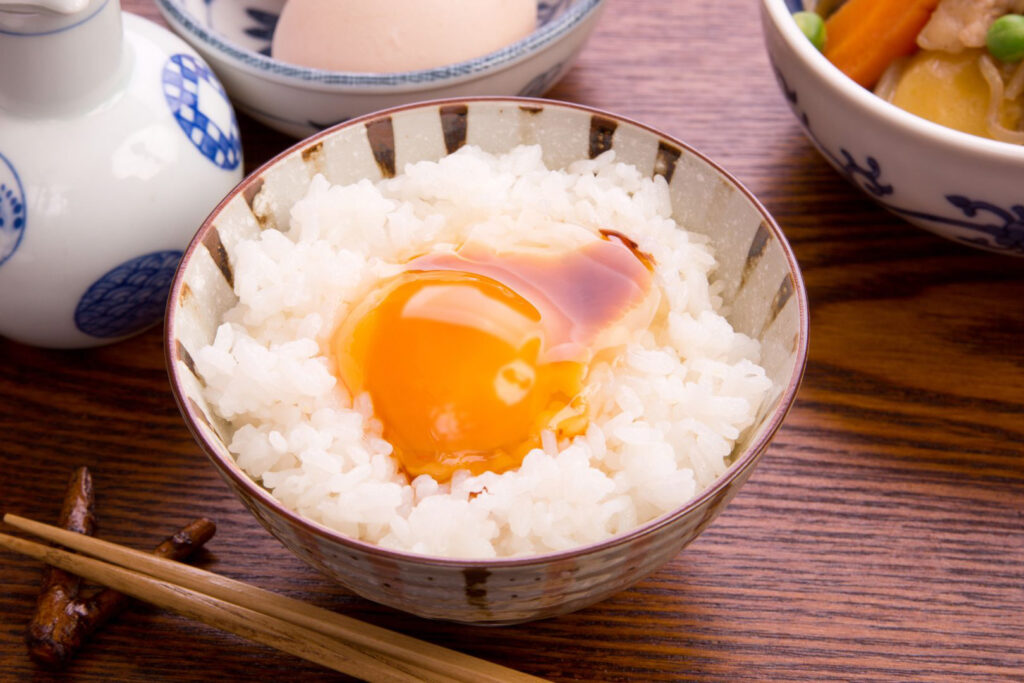
2. Tamago Kake Gohan (TKG)
Quick comfort: hot rice + raw egg + soy, mixed creamy.
- Cook or reheat rice until steaming hot (use fresh-cooked for best texture; rice should be fluffy and slightly sticky).
- Divide hot rice into 2 deep bowls; make a small well in the center of each with a spoon to cradle the egg.
- Crack one fresh egg into each bowl directly over the well (use very fresh eggs for safety and creaminess; room temp eggs mix better).
- Drizzle 1–2 tsp soy sauce or mentsuyu around the egg and rice (start low; you can add more after mixing).
- Using chopsticks or a spoon, vigorously mix in circular motions for 30–60 seconds: break yolk, incorporate whites into rice, and whip air in to create a creamy, custardy texture (rice grains should coat evenly without clumps).
- Add toppings: sprinkle shredded nori, chopped scallions, and furikake over the top. Mix lightly once more if desired.
- Serve immediately while hot (the residual heat gently cooks the egg slightly for silky result).
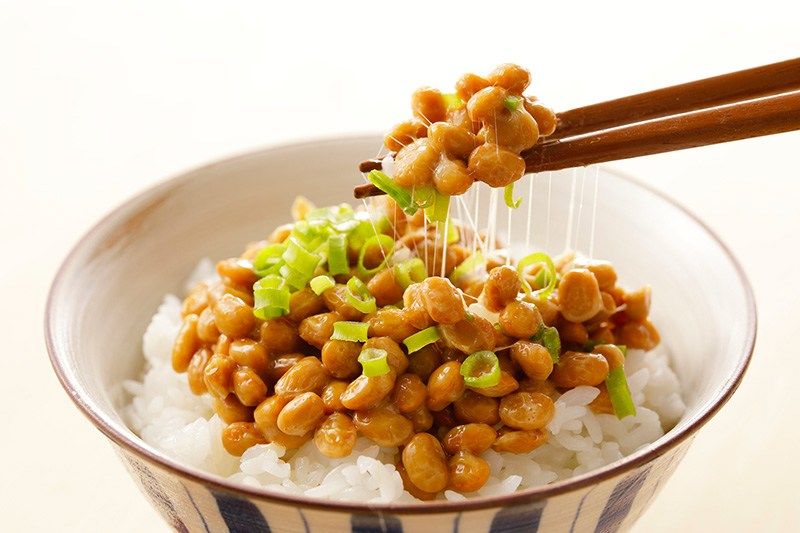
3. Natto – Fermented Soybeans
Sticky, umami-rich fermented soybeans – stir and serve over rice.
- Open natto pack; remove inner tray if present. Add included sauce and mustard (or 1 tsp karashi) directly on beans.
- Stir vigorously with chopsticks in circular motion for 1–2 minutes (60–100 stirs): this develops signature sticky strings and enhances umami/flavor (stirring is key—don't skip!).
- Add chopped scallions and shredded nori; mix another 10–20 times to distribute evenly.
- Serve over a bowl of hot steamed rice (mix lightly into rice or keep separate for texture contrast).
- Eat immediately; the strings are best fresh (if too strong, start with half pack and build tolerance).
:max_bytes(150000):strip_icc()/20230407-SEA-Natto-LorenaMasso-11-e365e51bca3e4b88be810a41a51fa830.jpg)
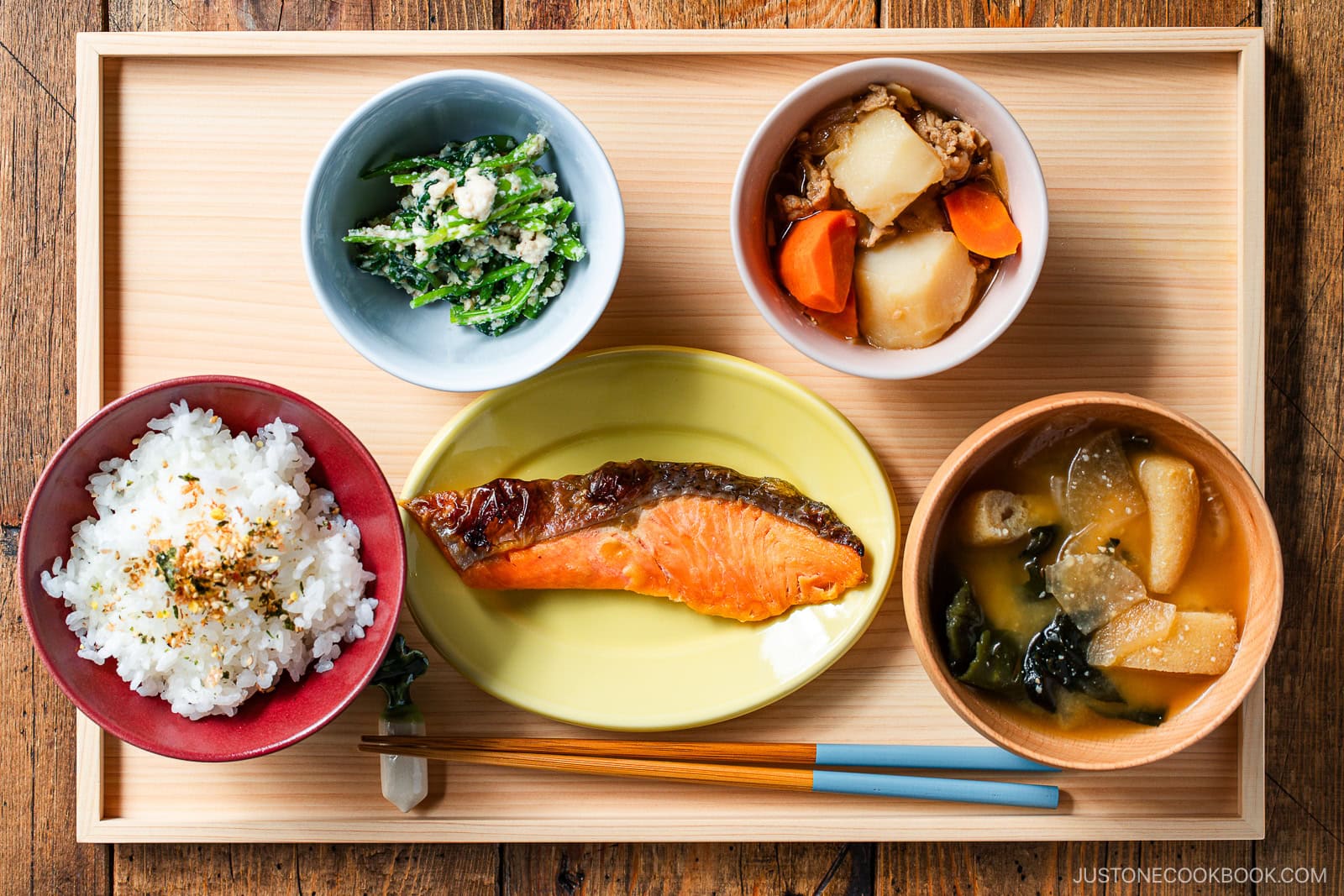
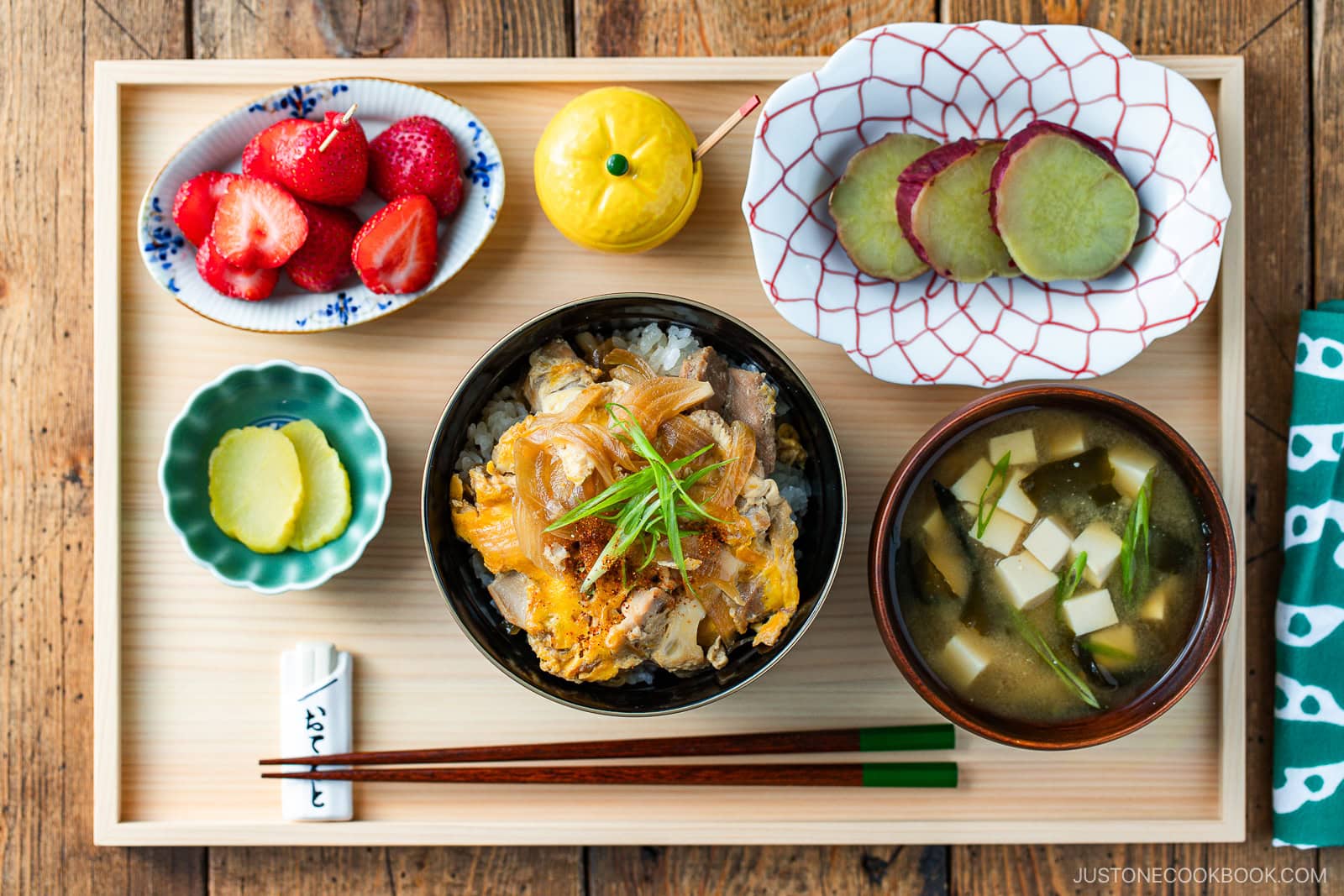
4. Ichiju Sansai (One Soup, Three Dishes)
Balanced traditional set: rice + miso soup + protein + sides (small breakfast portion).
- Prepare components ahead: cook rice, make miso soup last (to keep hot), grill shiozake, roll tamagoyaki, blanch veggies, portion pickles.
- Plate rice in small bowls (mound neatly for presentation).
- Ladle hot miso soup into separate bowls (add tofu/wakame just before serving to avoid overcooking).
- Arrange protein (shiozake) and tamagoyaki slices attractively on main plate.
- Add vegetable side (e.g., blanched spinach with light soy/sesame) and umeboshi for acidity/balance.
- Serve all at once while hot; eat in small bites, alternating flavors for harmony (traditional ichiju sansai principle).
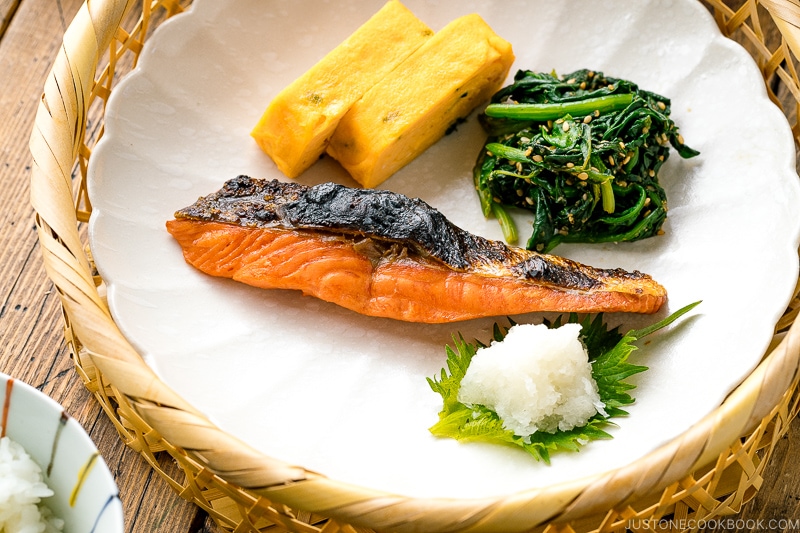
5. Shiozake – Salted Grilled Salmon
Flaky, savory salmon classic.
- Pat salmon fillets dry with paper towels to remove excess moisture.
- Sprinkle sake (if using) over both sides to remove fishy odor; pat dry again after 5 min.
- Sprinkle salt evenly on all sides (flesh, skin, edges); press gently so it adheres (use ~3% salt by weight for balanced seasoning).
- Place fillets skin-side down on a wire rack over a tray (or on paper towels in a container); refrigerate uncovered 6–12 hours (overnight ideal) to draw out moisture and firm texture (skin crisps better when dry).
- Next day: rinse fillets lightly under cold water to remove excess salt; pat very dry with paper towels.
- Preheat broiler or grill pan to medium-high (or oven broiler). Place fillets skin-side up on oiled rack/sheet.
- Broil/grill 4–5 min until skin crisps and chars slightly; flip carefully, cook flesh-side 3–4 min until opaque and flaky but still moist (internal temp ~60–63°C/140–145°F; avoid overcooking).
- Rest 1–2 min; serve hot with grated daikon radish if desired (cuts richness).
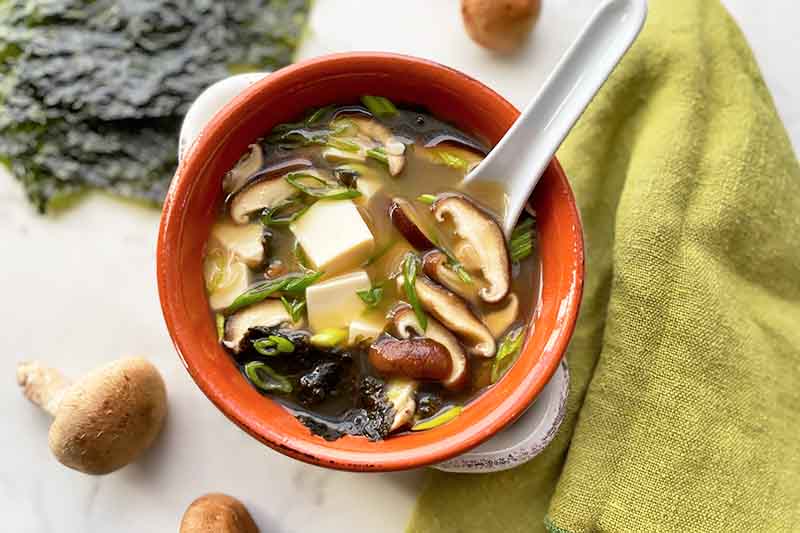
6. Japanese Rustic Miso Soup With Tofu and Seaweed
Warming umami broth.
- Rehydrate wakame: soak 10 g dried wakame in cold water 5–10 min until soft; drain, squeeze gently, cut into bite-size pieces if needed.
- Bring 800 ml dashi to gentle simmer in pot over medium heat (avoid hard boil to preserve delicate flavor).
- Add wakame and cubed tofu; simmer 2–3 min until tofu warms through and wakame softens further.
- Turn heat to very low. Ladle ~½ cup hot broth into a small bowl; add miso paste and whisk/stir until completely dissolved (this prevents lumps and preserves probiotics/enzymes).
- Pour dissolved miso back into pot; stir gently to combine (never boil after adding miso—turn off heat immediately if it starts bubbling).
- Taste and adjust (add more miso dissolved in broth if needed; flavor should be balanced umami, not overpowering).
- Ladle into bowls, garnish with sliced scallions, serve piping hot.
7. Japanese French Toast with Milk Bread
Custardy thick slices.
- Whisk eggs, milk, sugar, and vanilla in shallow dish until fully combined and sugar dissolves (no streaks).
- Place bread slices in custard; soak 1–2 min per side (flip carefully; shokupan absorbs quickly—don't over-soak or it falls apart).
- Heat butter in non-stick pan over medium-low heat until foaming but not browning.
- Add soaked slices; fry 3–4 min per side until golden and custardy inside (press lightly with spatula for even browning; lower heat if browning too fast).
- Rest on wire rack 1 min to crisp edges. Serve stacked with toppings.

8. Soft and Fluffy Japanese Milk Bread
Hokkaido-style shokupan – ultra-soft loaf (makes 1 loaf).
- Make tangzhong: whisk 25 g flour + 125 ml liquid in small pot; cook over medium heat, stirring constantly until thick paste (65°C/149°F, ~2–3 min). Cool to room temp.
- Activate yeast: mix warm milk + yeast + 1 tsp sugar; let sit 5–10 min until foamy.
- In stand mixer bowl: combine flour, sugar, salt, egg, yeast mixture, tangzhong; knead on low 5 min until shaggy.
- Add softened butter in pieces; knead 10–15 min on medium until smooth, elastic, and passes windowpane test (dough stretches thin without tearing).
- Shape into ball; place in oiled bowl, cover, proof in warm spot 60–90 min until doubled.
- Punch down, divide into 3 equal pieces; roll each into rectangle, fold sides in, roll tightly into logs.
- Place logs seam-down in greased 9x5 loaf pan; cover, proof 45–60 min until puffy (rises above rim).
- Bake at 180°C/350°F 30–35 min (tent foil if browning too fast); internal temp 88–90°C/190–194°F. Cool in pan 5 min, then on rack.

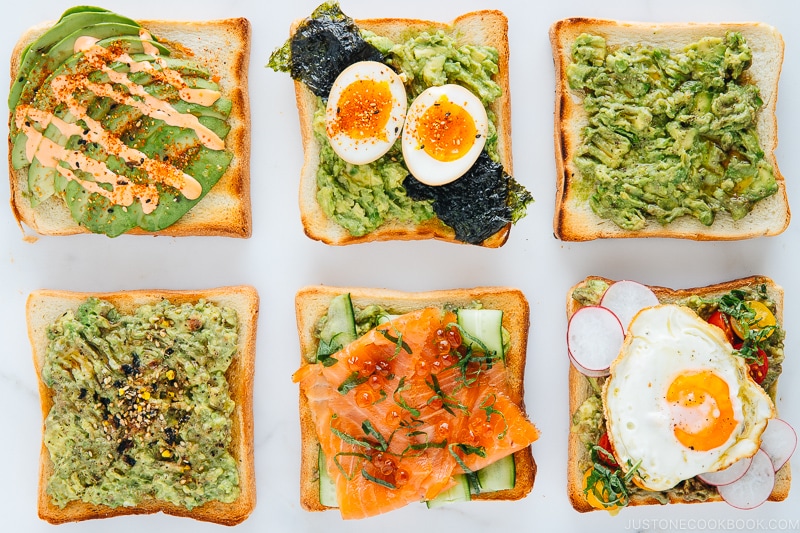
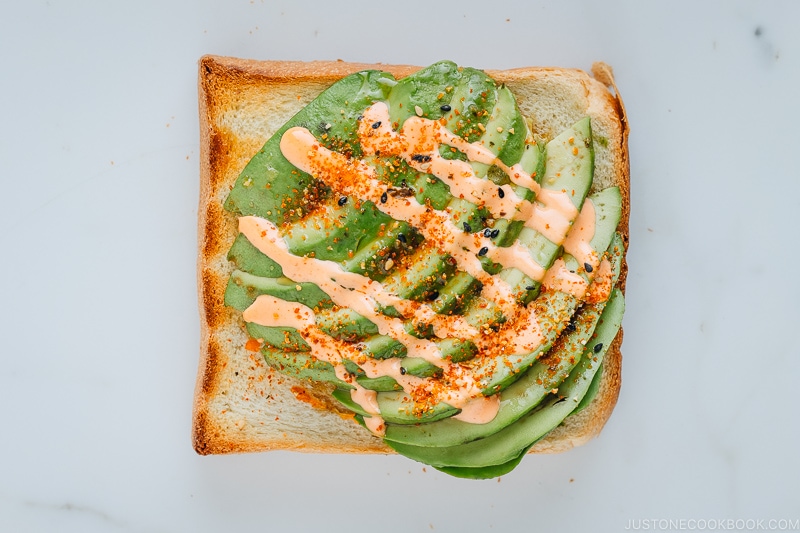
9. Japanese Flavorful Avocado Toast
Avocado with nori, ikura, sesame twist.
- Toast bread slices until golden and crisp (use toaster or oven at 180°C/5 min).
- Halve avocado, remove pit, scoop flesh into bowl; mash with fork to chunky texture (leave some lumps for interest).
- Add pinch salt + squeeze lemon juice; mix gently to prevent browning and brighten flavor.
- Spread mashed avocado thickly on each toast.
- Top evenly with shredded nori strips, ikura pearls, sesame seeds, and light soy drizzle if desired.
- Serve immediately for best texture (avocado browns quickly).
10. Japanese Breakfast Skillet
Veggie/tofu stir-fry with miso sauce + egg.
- Press tofu 10–15 min between paper towels to remove water; cube into 2 cm pieces.
- Slice mushrooms, bell pepper, onion thinly for quick cooking.
- Whisk sauce: miso, tomato paste, grated ginger, 1–2 tsp soy, 1–2 Tbsp water until smooth (adjust for thickness).
- Heat 1–2 Tbsp oil in large skillet over medium-high; add tofu, fry 4–5 min until golden on sides, remove.
- In same pan, add veggies; stir-fry 4–5 min until crisp-tender.
- Return tofu, pour sauce over; toss 1–2 min until coated and bubbly (don't overcook sauce).
- Fry eggs separately sunny-side up; top skillet with eggs. Serve hot.
11. Japanese Scrambled Eggs with Soy Sauce
Silky eggs with umami soy.
- Whisk eggs + soy sauce + mirin in bowl until uniform (no streaks; whisk vigorously 20–30 sec for fluffiness).
- Heat 1 tsp oil/butter in non-stick pan over low-medium heat (low is key for silky texture).
- Pour eggs in; let sit 10–15 sec until edges set slightly.
- Stir gently with chopsticks/spatula in circular motion, pushing set edges to center (continuous gentle stirring prevents large curds).
- Cook 1–2 min until softly set but still creamy (remove from heat early—residual heat finishes cooking).
- Plate immediately; garnish with scallions if desired.
12. Japanese Green Tea Rice – Ochazuke
Soothing rice with poured hot tea + toppings.
- Brew strong green tea (genmaicha/hojicha preferred for nutty flavor); keep very hot.
- Place hot rice in deep bowls (mound slightly for presentation).
- Add toppings: scatter shredded nori, umeboshi/pickles, flaked fish over rice.
- Just before eating, pour hot tea over rice to cover halfway (tea steams rice and creates light broth).
- Eat immediately with chopsticks/spoon; sip remaining broth (add more tea as needed).
13. Miso Breakfast Oats with Umami Flavor
Savory oats with miso and greens.
- Bring 500 ml water/broth to boil in pot over medium heat.
- Add oats; reduce to simmer, cook 5–7 min stirring occasionally until creamy (adjust liquid for desired thickness).
- Sauté greens separately: heat oil, add kale/spinach, cook 2–3 min until wilted; season lightly.
- Turn heat off oats; stir in miso paste gradually (dissolve in small amount of hot liquid first to avoid lumps).
- Divide oats into bowls; top with sautéed greens, egg (poached/fried), sesame seeds, chopped scallions.
- Serve hot; stir gently to combine flavors.

14. Japanese Rice Porridge – Okayu
Gentle comforting porridge.
- Rinse rice until water runs clear; drain.
- In pot, combine rice + 800–1200 ml water/dashi (more liquid for thinner consistency); soak 30 min if time allows (improves creaminess).
- Bring to boil over medium-high; reduce to low simmer, cover partially, cook 40–50 min stirring occasionally (add water if too thick; rice should break down into soft, porridge-like texture).
- Add pinch salt near end; taste and adjust (should be mild).
- Ladle into bowls; top with umeboshi (pit removed), sesame seeds, chopped scallions.
- Serve hot; stir toppings in as eating for bursts of flavor.
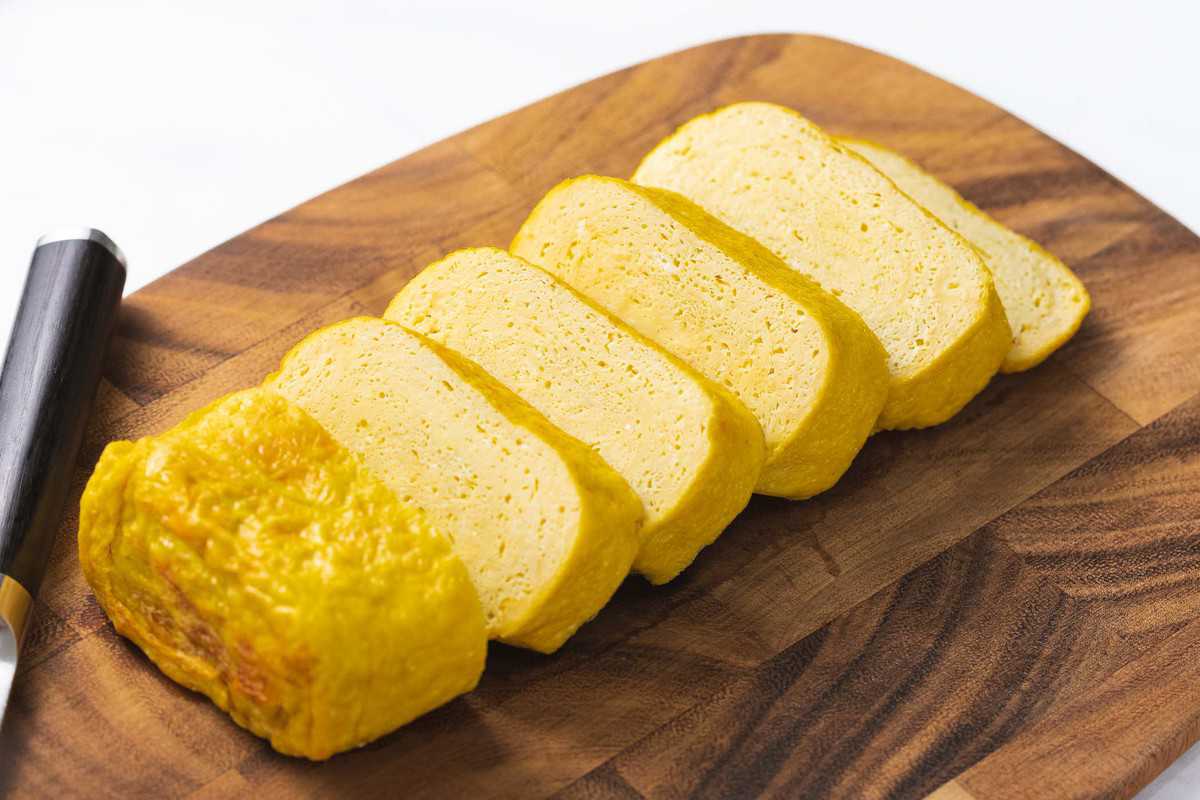
15. Rolled Omelette – Tamagoyaki
Sweet-savory layered egg roll.
- Whisk eggs + dashi + soy + mirin in bowl until uniform (strain through sieve for smoother texture if desired).
- Heat rectangular tamagoyaki pan (or regular small non-stick) over medium-low; add thin layer oil, wipe excess with paper towel (prevents burning).
- Pour thin layer (~1/4–1/3 egg mixture) into pan; tilt to spread evenly. Cook 30–60 sec until bottom sets but top still wet.
- Using chopsticks/spatula, gently roll from far end toward near end into tight log (push to one side of pan).
- Oil exposed pan area lightly; pour next thin layer under/around roll, lifting roll slightly to let egg flow underneath.
- Let set 30–60 sec; roll again over previous layer. Repeat 4–6 times until all mixture used (keep heat low to avoid browning too much unless desired).
- Rest rolled omelette 1–2 min in pan; transfer to bamboo mat or cutting board, shape gently into rectangle if needed. Cool slightly, slice into even pieces.
16. Strawberry Sauce/Compote
Chunky berry topping.
- Wash, hull, chop strawberries into small pieces (uniform size for even cooking).
- In saucepan, combine strawberries + sugar + lemon juice; let sit 10–15 min to release juices (maceration step).
- Bring to boil over medium heat, stirring occasionally; reduce to low simmer.
- Cook 10–15 min, mashing lightly with spoon for chunky texture (or longer for smoother; stir to prevent sticking).
- Test consistency: sauce thickens as it cools (should coat back of spoon). Remove from heat.
- Cool completely; store in jar (refrigerate up to 1 week). Serve warm or chilled over pancakes/yogurt.

17. Japanese Street Crepes
Thin crepes rolled with sweet fillings (makes 4–6 crepes).
- Whisk flour + sugar + salt; add egg + milk gradually, whisk until smooth lump-free batter (rest 15–30 min for better texture).
- Heat non-stick pan over medium; lightly grease with butter/oil, wipe excess.
- Pour ~1/3 cup batter; swirl pan immediately to spread thin even layer (adjust pour for size).
- Cook 1–2 min until edges lift and bottom lightly golden; flip carefully, cook 30–60 sec more.
- Slide crepe onto plate; repeat (stack with parchment between to prevent sticking).
- Fill: spread whipped cream in line near edge, add strawberries/chocolate, roll tightly into cone shape (fold bottom up first to seal).
- Serve immediately dusted with powdered sugar.

18. Onigiri
Portable rice balls with fillings (makes 4–6).
- Cook rice; keep warm (slightly sticky short-grain best). Mix salt into rice gently while warm.
- Wet hands with water + pinch salt (prevents sticking); take handful rice (~100–150 g).
- Make well in center; add ~1 Tbsp filling (umeboshi/salmon).
- Cover filling with rice; shape into triangle by cupping hands (press firmly but not too hard to avoid dense texture).
- Rotate and press 3 sides to form sharp triangle; wrap with nori strip (shiny side out) at base.
- Repeat; serve room temp or wrap for on-the-go (best eaten same day for freshness).

19. Taiyaki – Japanese Fish Waffle
Fish-shaped waffle with anko filling (makes 6–8).
- Whisk dry ingredients (flour, baking powder/soda, sugar); add wet (milk, egg, melted butter), mix until smooth (no overmixing).
- Preheat taiyaki iron (or sandwich maker/fish mold) over medium; grease lightly with oil/butter.
- Pour batter to fill half mold (~2/3 full); add 1–2 Tbsp anko in center (don't overfill or it leaks).
- Cover with top mold; cook 2–3 min per side until golden (rotate iron if needed for even browning).
- Open carefully; remove with chopsticks (edges crisp, center soft). Cool slightly on rack.
- Serve warm (best fresh; reheat in toaster if needed).

20. Fluffy and Light Japanese Pancakes
Thick soufflé-style pancakes (makes 4–6 small tall ones).
- Separate eggs (yolks in one bowl, whites in clean, dry bowl for max volume).
- Whisk yolks + 15 g sugar + milk + vanilla until smooth. Sift flour + baking powder + salt over; fold gently until just combined (no lumps, don't overmix).
- Beat whites on medium until foamy; add remaining 15 g sugar gradually, beat to stiff glossy peaks (hold shape but tip slightly when inverted).
- Fold 1/3 meringue into yolk batter with spatula using cut-and-fold motion to lighten. Fold in remaining meringue gently to retain air (batter should be fluffy/light).
- Heat non-stick pan over very low heat; lightly grease rings/molds if using (or free-form). Spoon batter high to build height.
- Cover pan; cook 3–4 min until bottom golden and top bubbles. Add splash water to pan edges for steam if needed; flip carefully (or add more batter on top for taller stacks), cook 3–4 min more covered.
- Remove from heat early (residual cooks center); rest 1 min. Stack, top with syrup/berries/cream. Serve immediately (they deflate over time).

These detailed steps should help you achieve restaurant-quality results at home. Practice makes perfect—especially with rolling eggs or folding meringue! Enjoy your breakfasts.